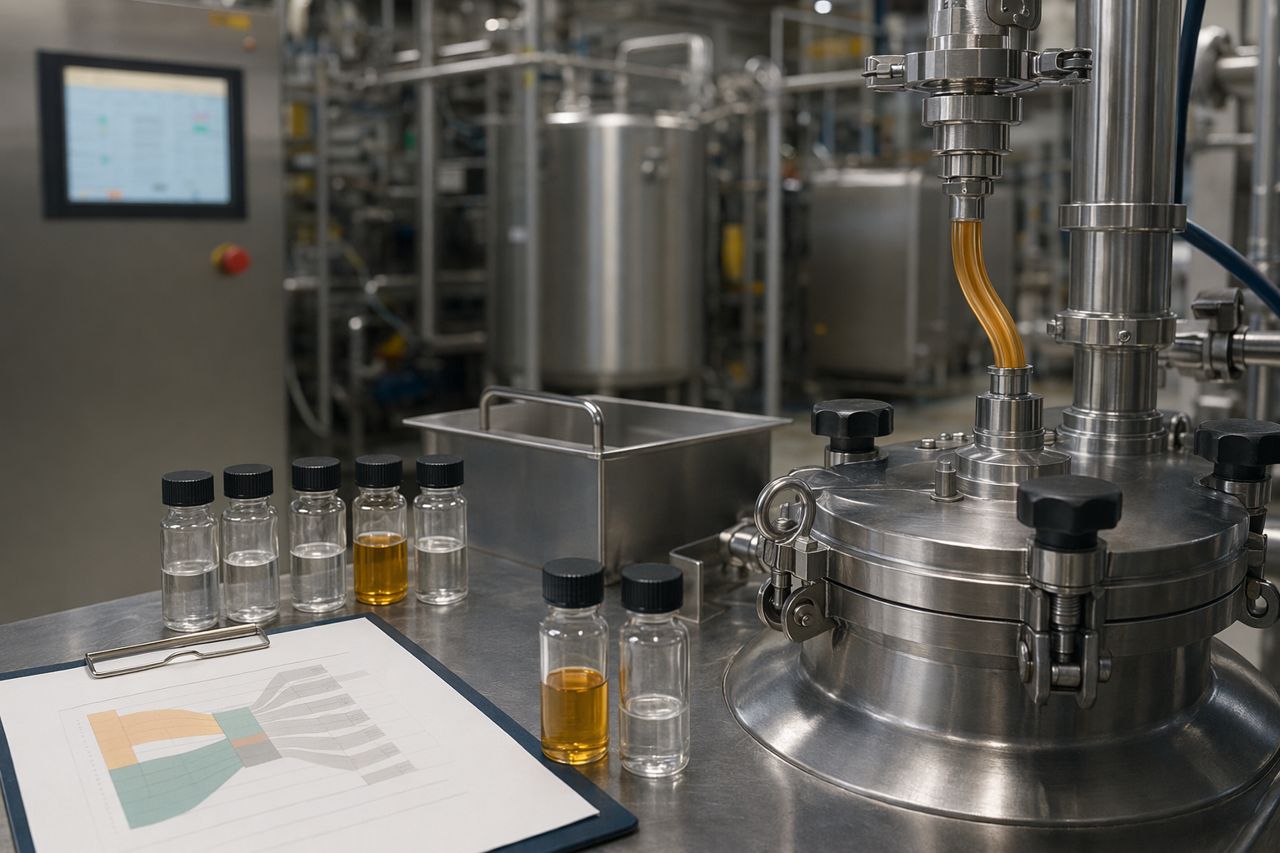
Bulk Enzyme Pilot Trial for Plant Process Improvements
When a plant is ready to move beyond a lab suggestion, the next decision is not simply which enzyme to buy. It is how to run a pilot that protects production, produces defensible data, and gives procurement a practical basis for scale-up.
Yieldwright Labs supports factories that need an industrial enzyme trial supplier for factories with a disciplined pilot framework: baseline review, enzyme fit, dose plan, operating constraints, KPI gates, sampling schedule, risk controls, and quote-ready supply planning.
This page is for process improvement, operations, technical service, procurement, and plant management teams that already see a possible enzyme opportunity and need a commercially grounded route to validation.
What a bulk enzyme pilot trial should prove
A pilot trial should answer plant-level questions, not just technical curiosity.
Typical objectives include:
- Higher conversion, extraction, separation, clarification, or release of target material
- Shorter process time without pushing equipment outside approved operating windows
- Lower rework, rejects, or downstream burden
- More consistent viscosity, filtration, flow, or clean-down behavior
- Reduced chemical intensity where the process case supports it
- A clear cost-to-benefit view before committing to routine supply
Yieldwright Labs structures the trial around the metric that matters to your operation. We do not treat the enzyme as a standalone product. We treat it as a controlled process variable.
The buying problem: pilot material without pilot structure
Many plants can source an enzyme sample. Fewer can source a pilot plan that is useful to production, quality, finance, and procurement at the same time.
Common failure points include:
- A dose range selected without plant variability in mind
- Too many variables changed during the same run
- No defined baseline period
- Sampling that does not match the decision being made
- Trial results that look promising but cannot be translated into supply terms
- Operators asked to run a test without clear hold points or escalation rules
- Procurement receiving a price request before the technical case is stable
Our role is to help close that gap. We help convert a promising enzyme concept into a plant trial that can be executed, measured, reviewed, and quoted.
Our pilot framework
1. Baseline diagnosis
We begin with the current process, not the enzyme catalog. The review typically covers:
- Feedstock or substrate variation
- Temperature and pH operating windows
- Residence time, hold time, or contact time constraints
- Mixing, dosing, and transfer limitations
- Current chemical additions and sequence
- Quality specifications and release limits
- Current bottleneck, loss point, or cost driver
- Existing plant data and practical sampling points
The output is a baseline map: what must stay controlled, what may be adjusted, and which KPI will decide whether the pilot has value.
2. Enzyme fit and trial logic
Once the process need is clear, we define enzyme candidates and the logic for testing them. This includes compatibility considerations, application sequence, likely operating window, and how the enzyme will be introduced without disrupting normal production controls.
We keep the design narrow enough to be useful. The goal is not to test every possibility. The goal is to make the next production-floor decision with confidence.
3. Bulk pilot material planning
A bulk pilot trial requires the right material format, handling plan, and usage assumptions. Yieldwright Labs helps specify what is needed for a controlled plant run, including:
- Liquid or powder handling preference
- Storage and site handling constraints
- Batch size or campaign logic
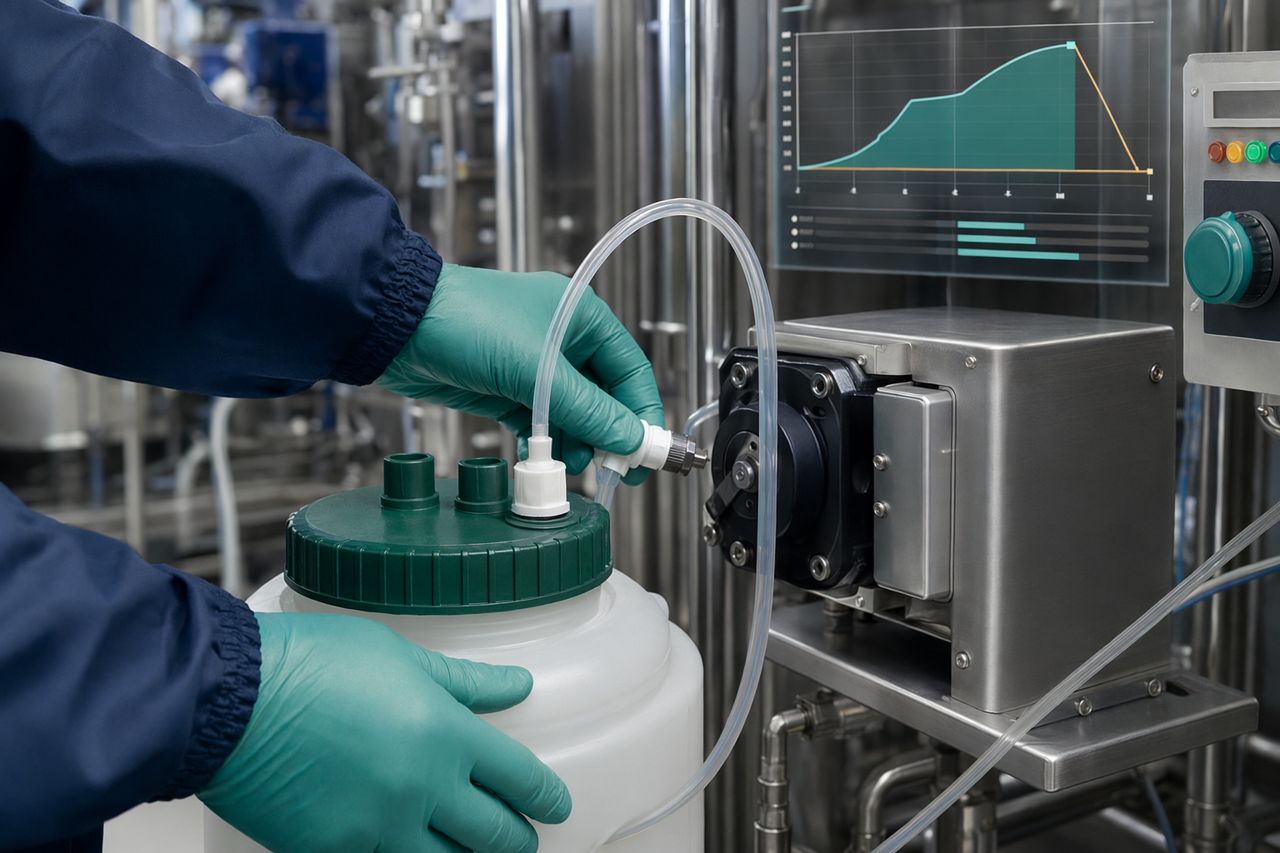
- Dosing equipment fit
- Addition point and sequence
- Expected consumption during the pilot window
- Contingency material for repeat or confirmation runs
This gives procurement and operations a clearer view of what they are requesting before a quote is issued.
4. Controlled dose plan
Dose planning is built around staged learning. We define a practical dose band, trial gates, and the decision logic for continuing, holding, adjusting, or stopping.
A useful pilot plan should show:
- Starting application point
- Approved adjustment range
- Run conditions to hold steady
- Sample timing
- KPI comparison method
- Pass, review, and stop criteria
- Operator notes required during the run
The dose plan must be simple enough for the floor and rigorous enough for the technical review.
5. KPI measurement and review
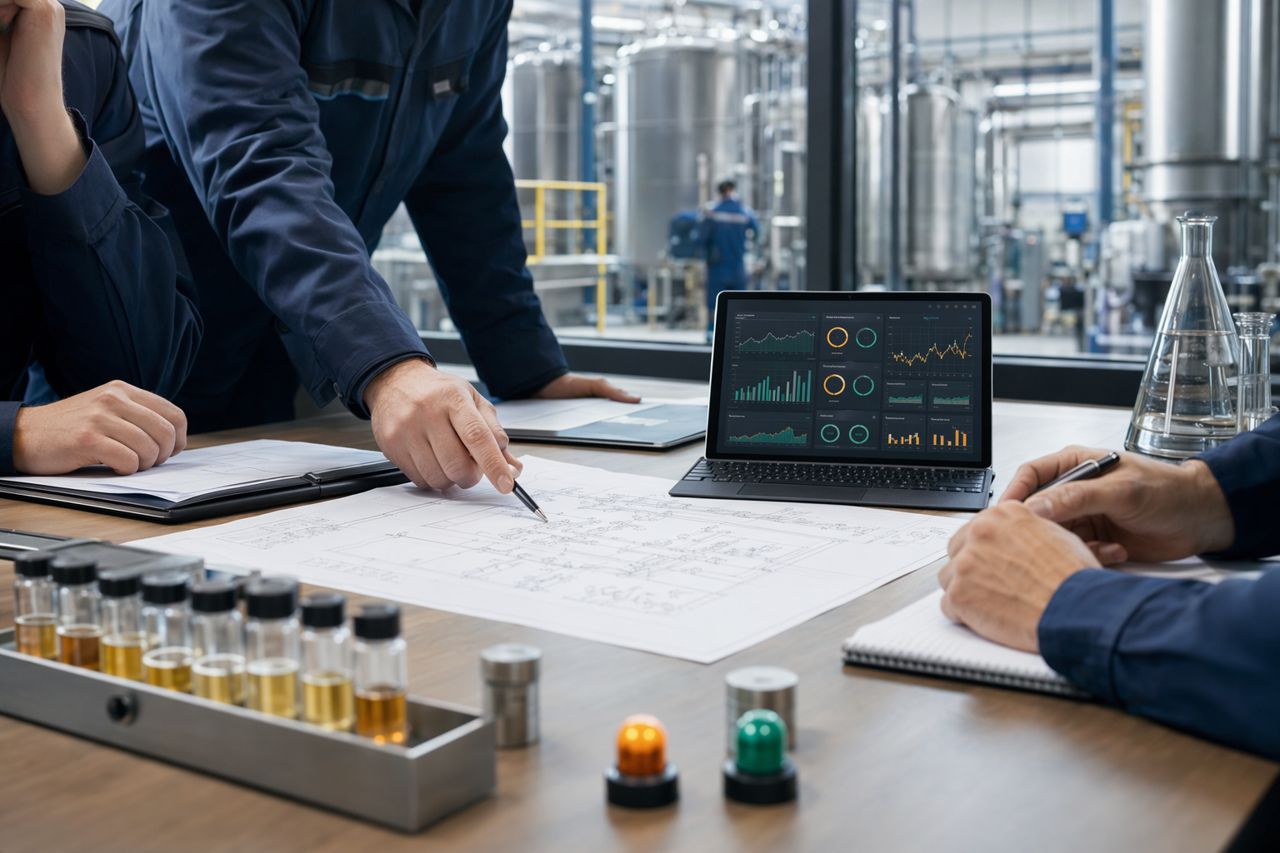
A trial is only useful if the result can survive review by production, quality, and finance. Depending on the process, we help define KPIs such as:
- Yield or recovery delta
- Throughput or cycle time effect
- Filtration or separation behavior
- Viscosity, flow, or handling change
- Rejects, rework, or quality variation
- Downstream load or cleaning impact
- Net process cost movement
- Operator burden or maintenance risk
We focus on measurable plant outcomes. Claims without a KPI do not support a buying decision.
Where Yieldwright Labs fits
Yieldwright Labs is not a generic sample desk. We support plants that need a structured bridge from enzyme selection to production validation.
Our work can include:
- Trial scoping and feasibility review
- Enzyme candidate recommendation
- Pilot material planning
- Bulk trial quote preparation
- Dosing and handling guidance
- KPI and sampling plan development
- Trial gate documentation
- Scale-up assumptions for routine supply
You bring the process objective, constraints, and current baseline. We help build the pilot package that can be reviewed internally and executed with control.
Typical plant situations we support
A bulk enzyme pilot trial is often appropriate when:
- The plant has completed initial lab screening and needs production-floor confirmation
- A process bottleneck has a credible enzyme route but no validated dose plan
- A supplier change or formulation change requires controlled comparison
- The technical team needs material for a campaign-scale run
- Procurement needs budgetary pricing tied to a real usage case
- Operations wants to limit production risk before adopting enzyme use
- A process improvement project needs measurable evidence before capital or supply commitment
If the situation is still exploratory, we can help define the pilot boundary. If the plant is already prepared, we can help move directly toward trial material and quote structure.
What we need to prepare a quote
To prepare a practical quote pathway, the request a quote form should include as much of the following as available:
- Industry and process type
- Target improvement or current bottleneck
- Feedstock, substrate, or process stream description
- Batch, campaign, or continuous process context
- Current operating window and major constraints
- Desired pilot scale or estimated trial duration
- Preferred liquid or powder format, if known
- Existing enzyme experience, if any
- Site location and required timing
- KPI that will determine success
Incomplete information is acceptable. We can identify what is missing and recommend the next clarification step.
Deliverables from a structured pilot engagement
A well-prepared pilot package may include:
- Defined trial objective
- Baseline assumptions
- Enzyme candidate rationale
- Pilot material requirement
- Dosing and addition plan
- KPI and sampling plan
- Trial gates and stop criteria
- Handling and storage notes
- Quote assumptions for scale-up
- Review format for post-trial decision-making
This gives internal stakeholders a common document set before the plant commits to routine use.
Risk control matters
Industrial enzyme trials should respect plant reality. Operators need clear instructions. Quality teams need known boundaries. Procurement needs a buying case. Management needs a decision point.
Yieldwright Labs builds pilot plans with those constraints in mind. The objective is not to run a dramatic test. The objective is to run a controlled test that produces evidence the plant can use.
Request a quote for a bulk enzyme pilot trial
If your plant is ready to evaluate an enzyme under controlled production conditions, use the on-site request a quote form. Share the process objective, current constraint, expected pilot scale, and KPI target.
Yieldwright Labs will review the information and respond with a practical route for pilot material, trial structure, and next-step pricing assumptions.