Enzyme Pilot Project Templates for Plant Teams
Before an enzyme is purchased, plant teams usually need something more practical than a product recommendation. They need a trial plan that production, quality, procurement, engineering, and finance can all review without guesswork.
Yieldwright Labs provides structured enzyme pilot project templates for factories preparing to evaluate enzyme solutions under real operating constraints. As an industrial enzyme trial supplier for factories, we help teams move from problem definition to controlled plant validation with clear gates, measurable KPIs, and quote-ready documentation.
These templates are built for internal planning, supplier comparison, and production-floor execution—not academic reporting and not generic lab screening.
Request a quote for template support, trial planning, and enzyme sourcing guidance.
What the Templates Help You Control
A poorly framed enzyme pilot can create more questions than answers. The most common issues are not technical failure; they are unclear baselines, uncontrolled process variables, missing hold points, weak sampling discipline, and no agreed decision rule before the trial starts.
Our templates are designed to help plant teams control:
- Trial scope: the process step, constraint, enzyme function, and expected operating change
- Baseline definition: current yield, cycle time, viscosity, filtration behavior, conversion, off-spec rate, or other relevant KPI
- Plant constraints: pH range, temperature window, residence time, shear, dosing access, cleaning requirements, and line availability
- Risk controls: allergen status, cross-contact concerns, worker exposure, downstream compatibility, and quality release implications
- Decision gates: when to continue, adjust, repeat, or stop the pilot
- Commercial evidence: what procurement and finance need before requesting a production supply quote
The result is a pilot package that can be reviewed before material is ordered and used during the trial without rewriting the plan mid-run.
Template Set Included in a Yieldwright Pilot Package
1. Pilot Scope Brief
A one-page document that defines the business problem, process area, enzyme hypothesis, target outcome, and internal stakeholders.
Typical use cases include:
- Improving extractability or conversion in a defined process step
- Reducing filtration bottlenecks or separation drag
- Shortening hold time without compromising product quality
- Improving consistency where raw material variation affects performance
- Testing whether an enzyme route can replace or reduce a more costly processing aid
2. Baseline and KPI Map
This template captures the current operating condition before enzyme dosing begins. It separates must-hit KPIs from supporting observations, so teams do not overinterpret noise.
Common KPI categories include:
- Yield or recovery
- Throughput or cycle time
- Viscosity or flow behavior
- Filtration or separation performance
- Product quality attributes
- Rework, downgrade, or off-spec events
- Cost impact at the process step
3. Trial Design Matrix
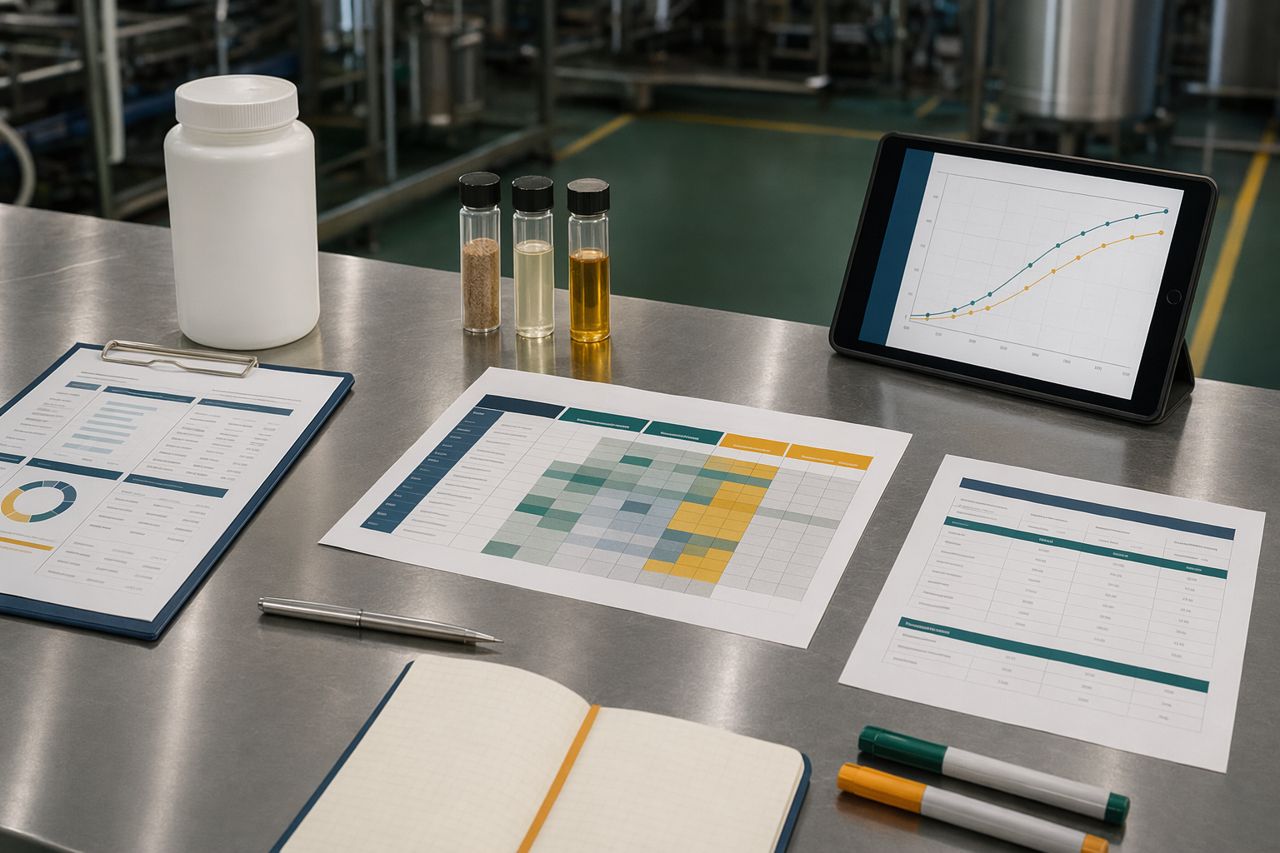
A controlled table for comparing dosage ranges, contact time, addition point, operating conditions, and sampling moments. The goal is not to test everything; it is to test enough to make a credible plant decision.
The matrix is structured to support:
- Baseline run
- Low-risk starting condition
- Adjusted condition based on first observations
- Confirmation run
- Hold point before broader production exposure
4. Plant Readiness Checklist
This checklist confirms that the site can run the pilot without disrupting normal production controls.
It covers:
- Material receipt and storage
- Dosing access and equipment fit
- Operator instructions
- Cleaning and changeover requirements
- Batch record or run sheet updates
- Quality release requirements
- Escalation contacts during the pilot window
5. Risk Register and Control Plan
A practical register that lists foreseeable process, quality, safety, and commercial risks. Each risk is paired with a control action and an owner.
Examples include:
- Enzyme added at the wrong process stage
- Incomplete mixing before the reaction window closes
- Downstream impact on texture, clarity, separation, or stability
- Inconsistent raw material condition between baseline and trial runs
- Unclear stop criteria if the first result is marginal
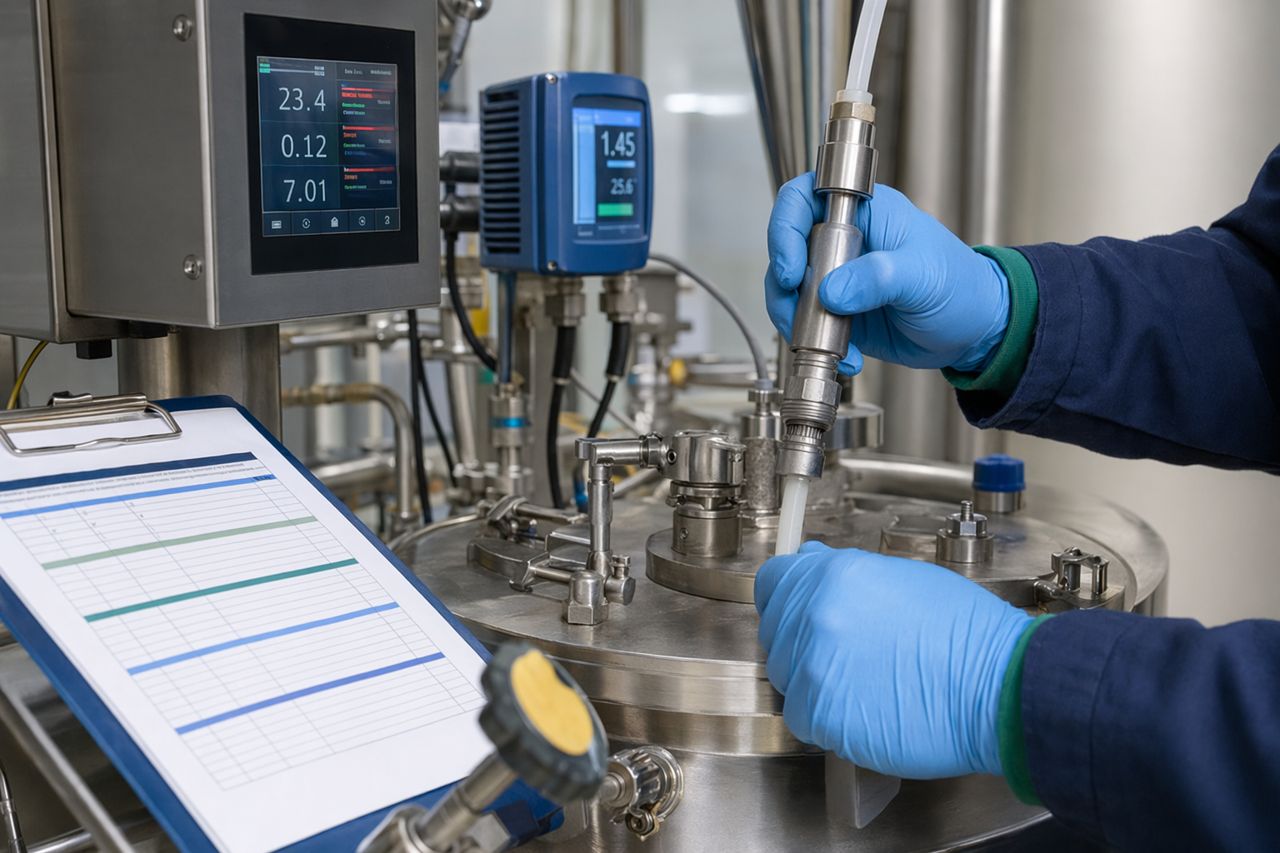
6. Sampling and Observation Log
A structured log for operators and technical staff to capture what happened during the run. It keeps observations tied to process events instead of informal notes after the fact.
The log can include:
- Run condition
- Addition point
- Process status at dosing
- Visual or handling observations
- Sample identifier
- Deviation notes
- Immediate operator feedback
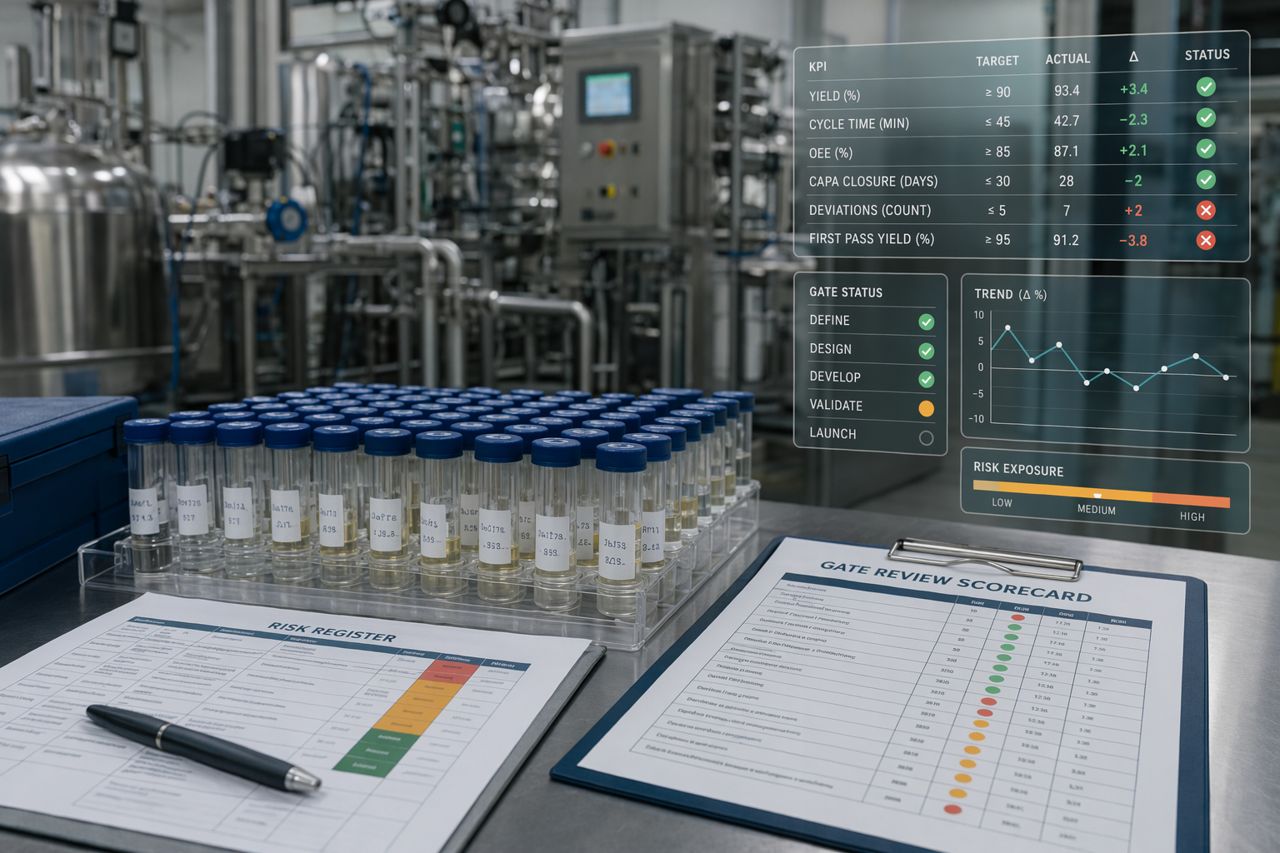
7. Gate Review Scorecard
A decision tool for moving from pilot to confirmation, from confirmation to quote, or from trial to closure.
The scorecard helps teams classify results as:
- Proceed to production quote
- Repeat with adjusted conditions
- Re-scope the enzyme target
- Stop due to process or commercial mismatch
Built for Plant Teams, Not Just R&D
Enzyme pilots often start in technical conversations, but they succeed or fail in the plant. Yieldwright Labs structures templates around the realities of factory work:
- Limited line time
- Tight sanitation windows
- Production priorities that can override trials
- Operator workload
- Quality release discipline
- Procurement requirements before supplier selection
- Finance pressure to show credible cost impact
We write the documentation in language that production managers, process engineers, QA, and procurement can all use. The objective is to make the pilot easier to approve, easier to run, and easier to evaluate.
When to Use These Templates
These pilot project templates are useful when your team is:
- Preparing an internal business case for enzyme testing
- Comparing enzyme supplier proposals
- Moving from bench recommendation to factory validation
- Planning a first production-scale trial
- Repeating a trial that previously produced unclear results
- Building a quote request with process context instead of a generic product inquiry
If you already know the target process step, Yieldwright Labs can help convert that information into a structured pilot package. If the enzyme target is still uncertain, we can help define the trial question before supplier discussions begin.
What We Need From Your Team
To prepare a fit-for-purpose pilot template set, we typically ask for:
- Process step and current constraint
- Raw material or substrate description
- Current operating window
- Target KPI or commercial driver
- Available trial window
- Production, quality, and engineering constraints
- Any prior enzyme testing results
- Procurement timing and approval pathway
You do not need a finalized enzyme specification before starting. The templates can be used to clarify what must be requested from suppliers and what evidence is required before buying material.
From Template to Quote-Ready Trial Plan
Yieldwright Labs can support the full planning path:
- Diagnose the process constraint and define the enzyme hypothesis.
- Build the pilot documentation for internal review.
- Identify suitable enzyme options based on process fit and supplier availability.
- Structure the trial matrix around plant constraints and KPI visibility.
- Prepare the quote request package so suppliers understand the application, not just the product category.
- Review trial results and support the next gate decision.
This gives plant teams a practical route from internal planning to production-floor validation, with fewer uncontrolled variables and less procurement ambiguity.
Request a Quote
If your plant is preparing an enzyme trial and needs documentation before purchasing, contact Yieldwright Labs for a structured pilot template package.
Use the on-site request a quote form and include your process step, target KPI, and expected trial timing. We will respond with the information needed to scope the template set and support the next internal approval gate.