From Bench Trial to Factory Floor: Translating Enzyme Results into Production Reality
A successful bench trial proves that an enzyme can influence the target reaction under controlled conditions. It does not automatically prove that the same result will survive plant realities: variable feedstock, non-ideal mixing, heat-transfer lag, operator workload, cleaning windows, procurement lead times, and the economics of production downtime.
For process improvement managers, the useful question is not simply, “Did the enzyme work in the lab?” The useful question is, “Can we validate a controlled improvement in the factory without creating unacceptable operational risk?”
Yieldwright Labs supports factories as an industrial enzyme trial supplier for factories by structuring the path between lab recommendation and production-floor evidence. The work is practical: define the trial window, control the variables, agree the KPIs, prepare the operators, and make the procurement plan fit the production plan.
Why bench results fail during scale-up
Bench work is designed to isolate variables. Production environments combine them. That difference explains many disappointing enzyme trials.
Common scale-up failure points include:
- Mixing mismatch: lab agitation can expose substrate and enzyme more evenly than full-scale equipment.
- Timing drift: production steps may not hold the same contact time as the bench method.
- Temperature movement: heating and cooling profiles in plant vessels rarely match small-scale trials.
- Feed variability: moisture, solids profile, pH range, inhibitor carryover, or upstream process variation can shift response.
- Dosing execution: manual additions, pump accuracy, dilution practices, and addition point selection can change effective exposure.
- Operator interpretation: small changes in sequence or hold time can become large differences in outcome.
- Procurement timing: enzyme availability, packaging format, storage, and shelf-life planning must match the trial calendar.
The solution is not to overcomplicate the trial. It is to translate the bench result into a production protocol that respects the factory’s constraints.
Start with the production question, not the enzyme
A production trial should begin with a commercially relevant process question. Examples include:
- Can we reduce rework or downgrade rate without extending cycle time?
- Can we improve extractability, viscosity control, filterability, release, or separation performance?
- Can we stabilize output quality across variable raw material lots?
- Can we improve throughput by reducing a known bottleneck?
- Can we lower corrective chemical usage while maintaining specification?
Once the production question is clear, the trial design can connect enzyme selection, dose range, addition point, contact time, and operating conditions to measurable plant outcomes.
Define the baseline before changing the process
A weak baseline makes a trial hard to defend. Before adding an enzyme, the plant team should document how the process performs under normal conditions.
A useful baseline typically includes:
- current throughput or cycle time
- yield, recovery, conversion, or separation performance
- quality parameters tied to release specification
- reject, rework, downgrade, or off-spec frequency
- energy, water, cleaning, or filtration indicators where relevant
- raw material lot characteristics
- normal operating ranges for temperature, pH, solids, residence time, and flow
- operator sequence and intervention points
The baseline does not need to be perfect. It needs to be credible enough that any improvement can be separated from routine variation.
Convert the bench recommendation into a plant trial envelope
The trial envelope defines where the process is allowed to move and where it must not move. It protects production while giving the enzyme a fair opportunity to show value.
Key elements of the trial envelope
1. Addition point
Where the enzyme enters the process determines exposure, mixing, carryover, and downstream interaction. The best addition point is often not the easiest one. It must be accessible, repeatable, and safe for operators.
2. Dose range
The dose plan should be narrow enough to avoid waste and broad enough to identify a practical response. Overdosing can hide the true economics. Underdosing can create a false negative.
3. Contact time
The enzyme must have enough time under useful conditions to act. A plant trial should confirm that real residence time, not theoretical batch time, supports the expected response.
4. Temperature window
Temperature should be managed as a range, not a single number. Heating lag, cooling delay, and product hold behavior can all influence enzyme performance.
5. Process interruptions
Stops, delays, cleanouts, upstream shortages, or unplanned maintenance can invalidate a trial run. Predefine which deviations trigger a repeat.
Mixing is often the hidden scale-up variable
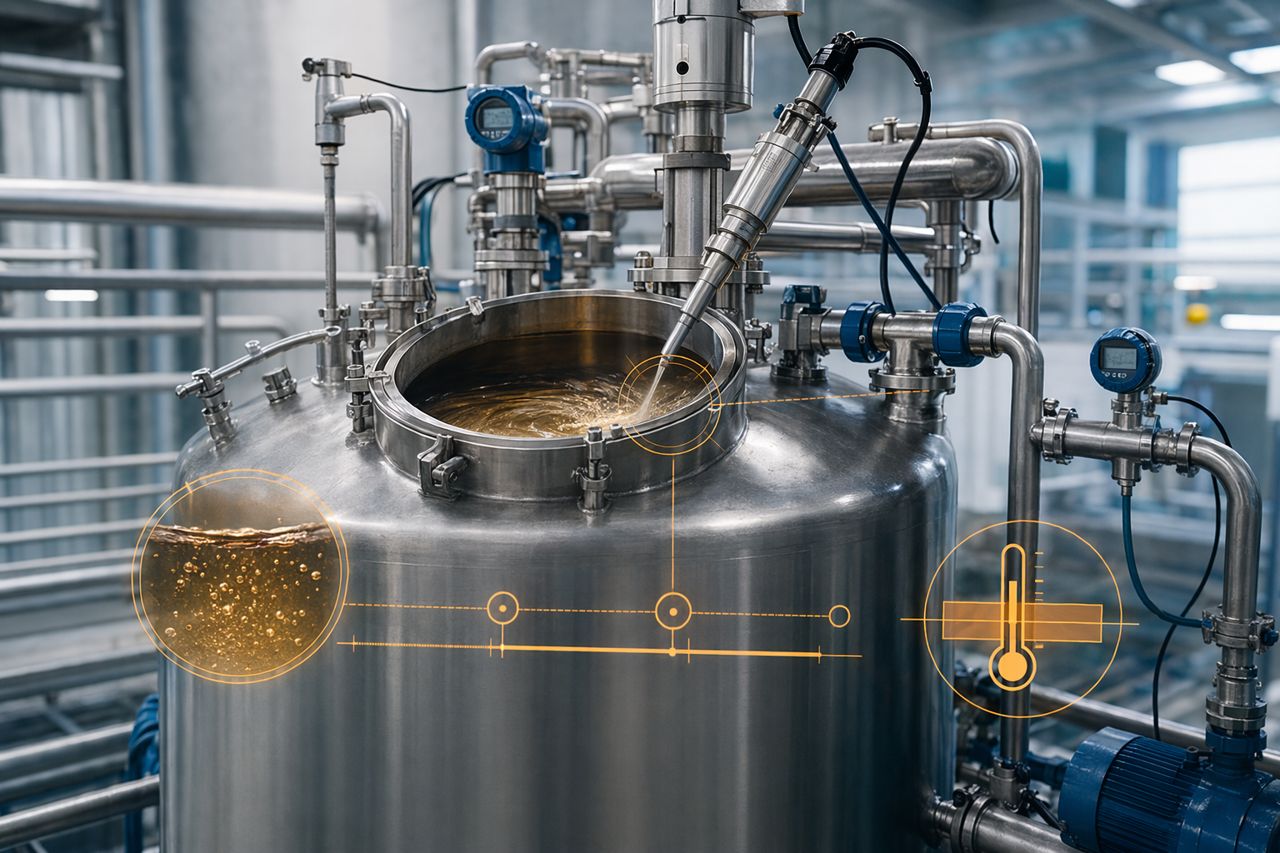
In small vessels, mixing can be rapid and uniform. In production equipment, enzyme distribution depends on vessel geometry, agitator design, viscosity, solids loading, flow path, and addition method.
When mixing is not controlled, teams may misread the result. A poor outcome might be caused by inadequate distribution rather than incorrect enzyme selection.
Practical controls include:
- selecting an addition point with sufficient turbulence or recirculation
- pre-diluting where compatible with the process and handling requirements
- verifying pump or manual addition sequence
- avoiding addition during dead zones or unstable flow
- recording agitation, recirculation, or transfer conditions during the trial
Mixing does not have to be perfect. It has to be repeatable and understood.
Align the trial with operator reality
Production-floor validation depends on people as much as chemistry. If the protocol is difficult to execute during a normal shift, it will not become a durable process improvement.
Operator preparation should include:
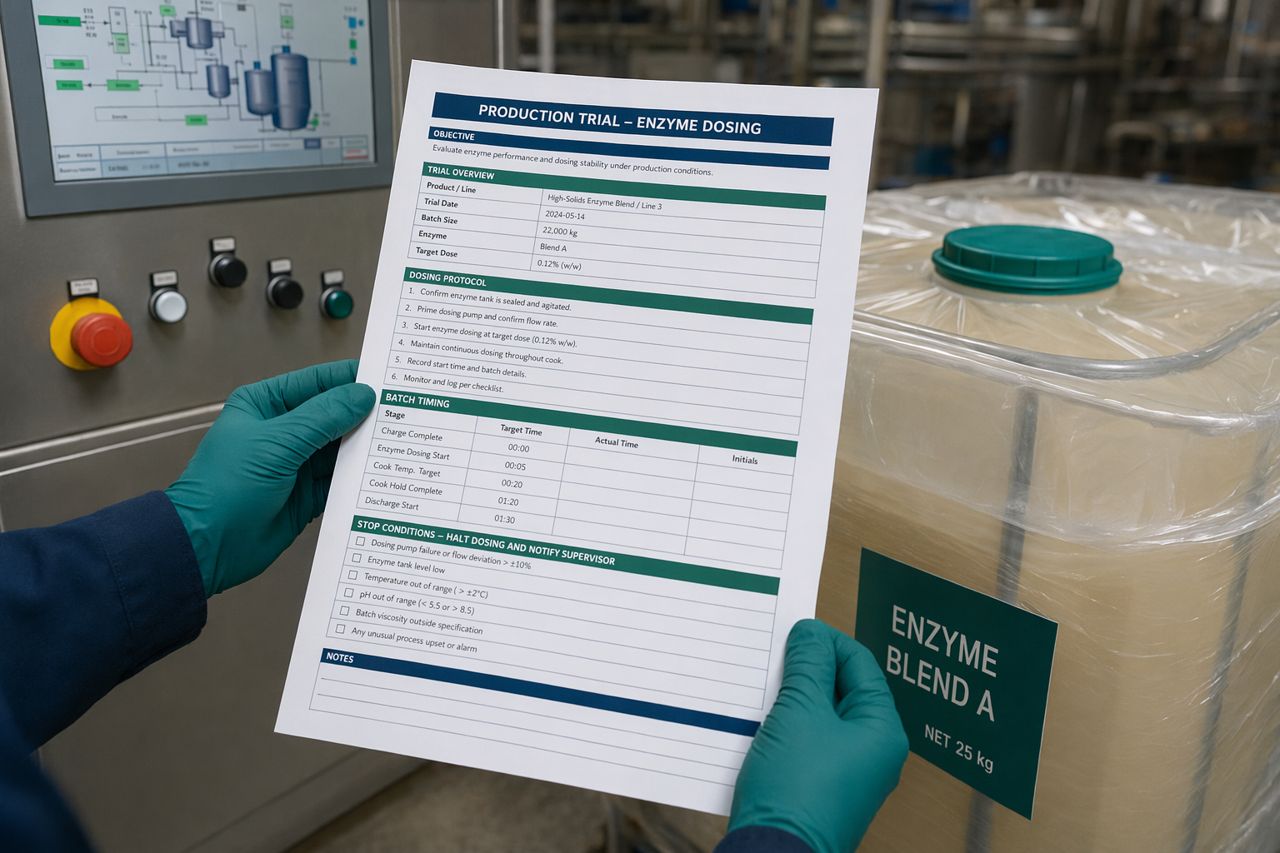
- one-page trial instruction sheet
- addition timing and location
- hold points and stop conditions
- sample points and labels
- required observations
- escalation contacts
- cleanup and handling instructions
- shift handover notes
The best trial protocols are specific enough to prevent interpretation drift and short enough to be used under production pressure.
Choose KPIs that can survive finance and operations review
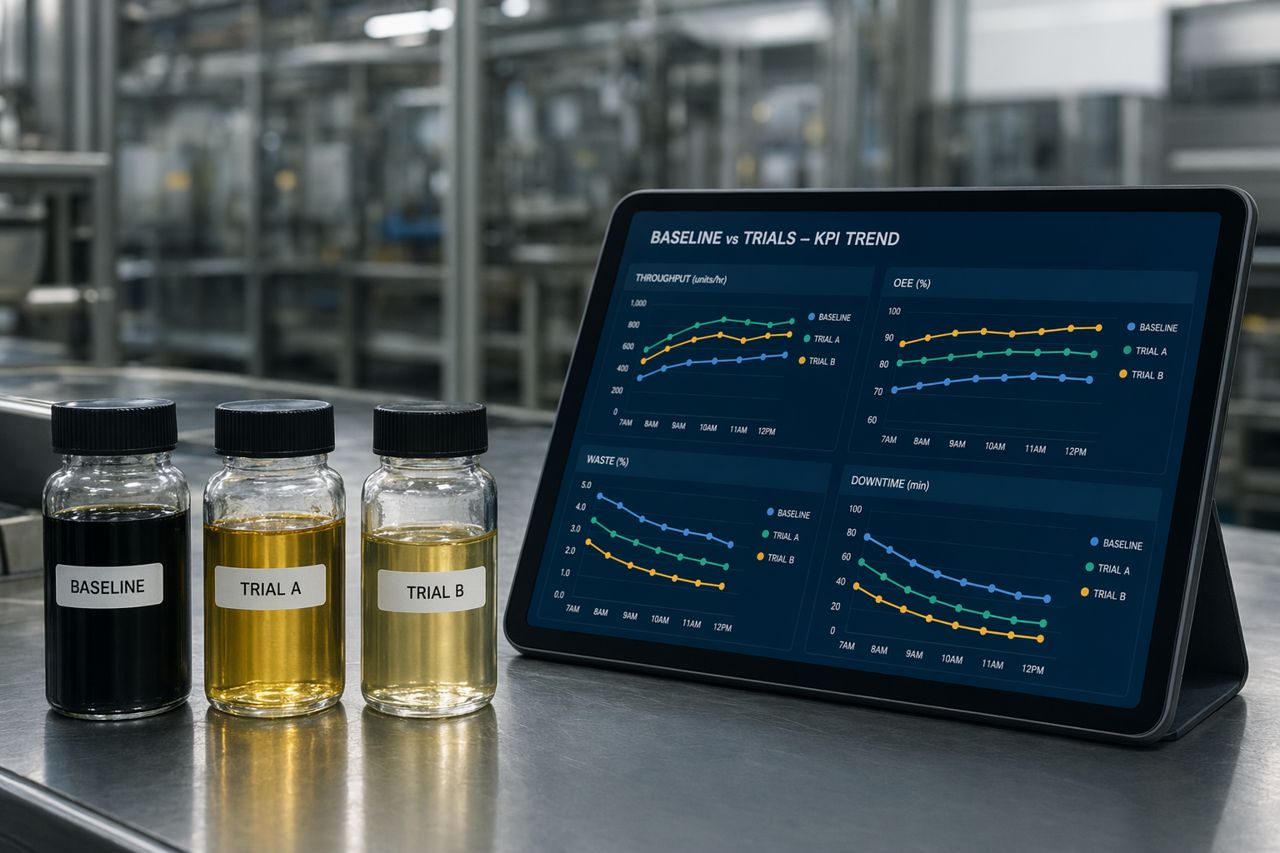
A trial result is only useful if it can be reviewed by operations, quality, procurement, and finance. KPIs should connect process performance to business value.
Common KPI categories include:
- yield or recovery improvement
- throughput or cycle-time reduction
- off-spec, downgrade, or rework reduction
- filter rate, separation efficiency, viscosity behavior, or release consistency
- quality conformance across lots
- production downtime avoided
- cost per treated batch or production volume
- net contribution after enzyme cost and implementation effort
Avoid relying on a single measurement. A credible trial usually combines process data, quality data, production observations, and economic interpretation.
Plan procurement before the trial date is fixed
Procurement is often treated as an administrative step. In factory trials, it is part of risk control.
Before the trial window is confirmed, the team should verify:
- product availability and lead time
- packaging size and handling suitability
- storage requirements at site
- documentation needed by quality, safety, and procurement teams
- internal vendor setup requirements
- batch traceability expectations
- contingency stock for repeat runs
A trial can lose momentum if the technical team is ready but the material is not available in the right format at the right time.
Trial gates reduce production risk
A staged trial structure helps the factory learn without overcommitting.
Gate 1: Bench interpretation
Confirm the target effect, approximate dose range, operating window, and likely process constraints.
Gate 2: Pilot or controlled side-stream, where available
Use an intermediate step to test mixing, contact time, sampling, and early KPI movement without full production exposure.
Gate 3: Limited production run
Run a defined batch, shift, line segment, or time window with agreed stop conditions and comparison data.
Gate 4: Repeat confirmation
Repeat under representative conditions to confirm that the improvement is not a one-off result.
Gate 5: Implementation review
Translate the result into operating instructions, procurement rhythm, quality documentation, and financial case.
What a strong production trial record includes
A good trial record makes the decision easier after the run. It should show what happened, what changed, and whether the change matters.
Include:
- production date, line, vessel, or process area
- raw material lot and relevant characteristics
- enzyme product, lot, addition amount, and addition time
- operating conditions during the response window
- deviations or interruptions
- samples collected and where they were taken
- KPI results against baseline
- operator observations
- quality disposition
- estimated economics
- recommendation: stop, repeat, adjust, or implement
The record should be written for decision-makers, not only for technical staff.
The practical path to production evidence
Enzyme trials work best when they are treated as controlled process changes, not as product demonstrations. The bench result is the starting evidence. The factory trial is where the business case is built.
A disciplined scale-up plan protects production, reduces uncertainty, and gives the plant team a clear basis for action. That plan should define the process question, operating envelope, sampling plan, KPI structure, procurement timing, operator instructions, and decision gates before the first production addition is made.
Yieldwright Labs helps factories design and supply enzyme trials that are built for production validation, not just laboratory promise.
Request a quote for a structured enzyme trial
If you are preparing to move from bench recommendation to plant validation, share your process objective, operating constraints, and target KPIs. We will help define a trial approach, supply requirements, and a practical quotation for your production environment.